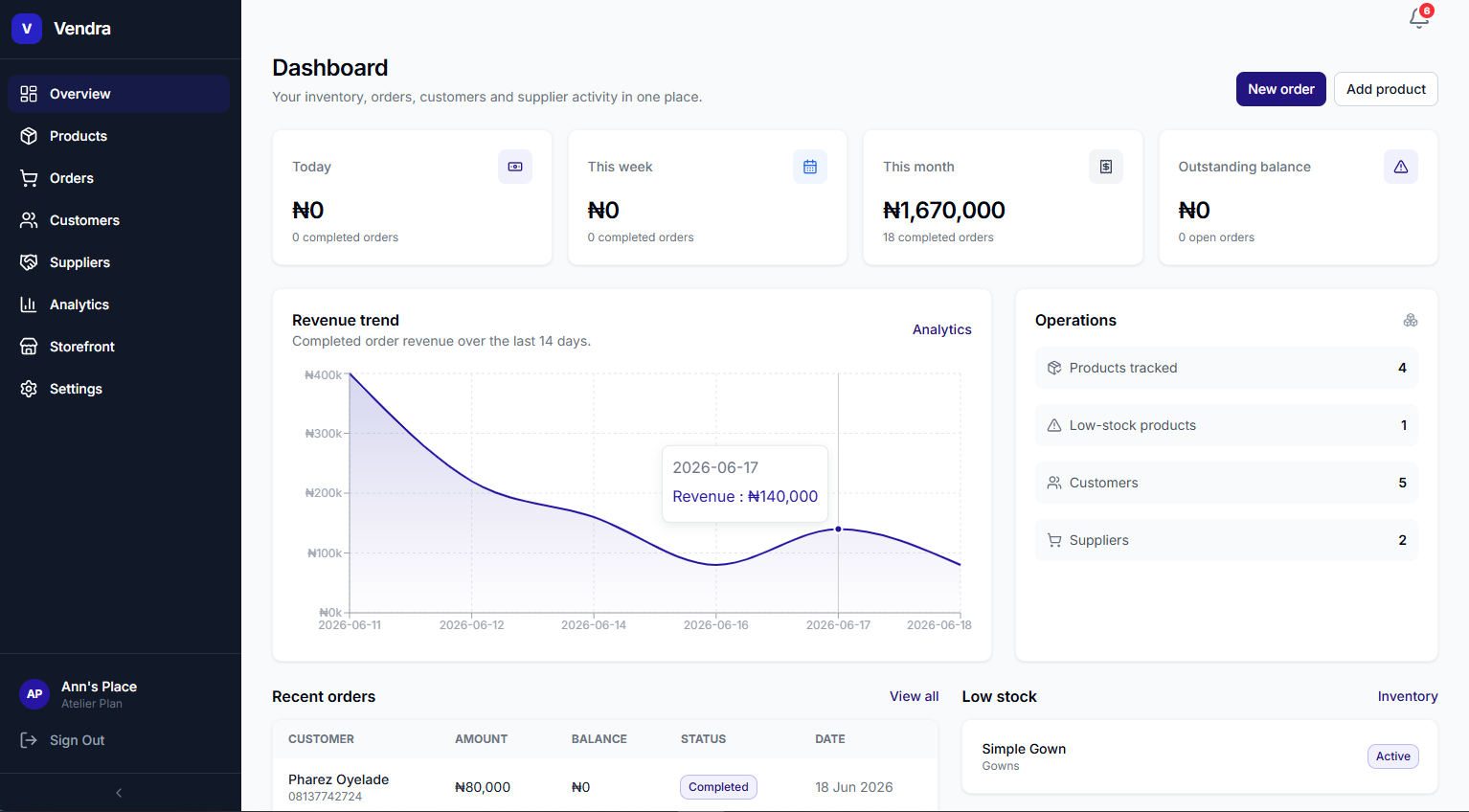
The Problem
Nigerian fashion vendors often rely heavily on tools like WhatsApp, Instagram, and physical notebooks, to manage orders, track inventory, and handle customer relationships. This approach leads to manual errors, difficult payment reconciliation, and limits their ability to scale.
Vendra (internally developed as Sabi Store) was conceived as a SaaS solution to consolidate storefront management, provide a lightweight CRM, and streamline complex product variants into one platform tailored specifically for local fashion businesses.
Fragmented Tools
Complex Inventory
My Role & Responsibilities
As the Fullstack Engineer, I architected and built the MVP from the ground up. Building a robust Express API, and crafting a responsive vendor dashboard using Next.js and Tailwind CSS.
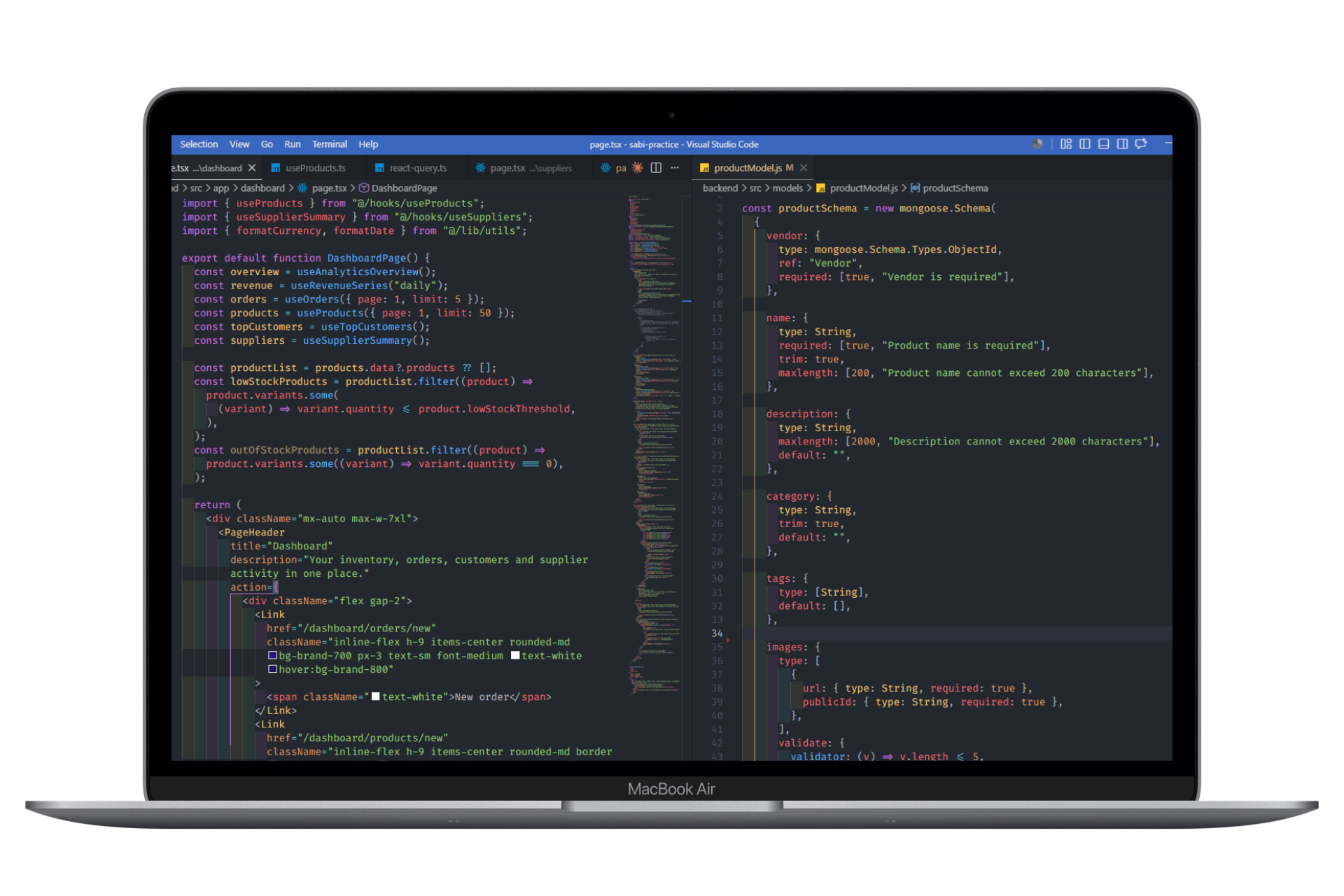
Architecting a scalable MongoDB schema to handle fashion product variants (size, color, custom pricing).
Developing a robust vendor dashboard and admin dashboard using Next.js App Router and Tailwind CSS.
Integrating Paystack for secure, tiered vendor subscriptions and seamless customer checkouts.
Solution Architecture
Leveraging Next.js App Router provides excellent SEO capabilities for public vendor storefronts, while offering a fast, responsive, and dynamic dashboard experience for vendor management. Zustand manages the client-side state.
A modular Node/Express API manages the data flow. MongoDB was specifically chosen for its schema flexibility, allowing complex product variants to be stored seamlessly as nested documents.
Paystack was integrated early on to power the platform's subscription model, handling billing for vendor tiers and providing seamless checkout capabilities for end customers.
Technical Decision
Why MongoDB over PostgreSQL for Vendra's inventory system?
.png)
The core challenge was modeling product variants (sizes, colors, stock limits, and dynamic pricing). Embedding variant arrays inside a single Product document in MongoDB is a much more natural fit than mapping multiple join tables in PostgreSQL.
This document-based approach accelerated MVP development, seamlessly matched the frontend form structures.
Current State
MVP Built
Development
Core dashboard & storefront active on staging
Beta
Preparation
Preparing for first cohort of vendors
Next Steps
Phase 2 Hooks
Discovery phase architecture